and successors:
Salem Brewery Ass'n.
(1933-1943)
and
Sicks' Brewing Company
(1943-1953)
|
The July 1878 Salem Business Directory stated:
|
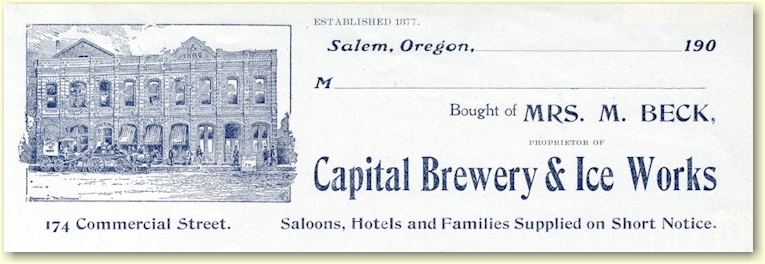
Bill head for Mrs. Beck's
Capital Brewery & Ice Works, ca.1901 -
brewery close-up
|
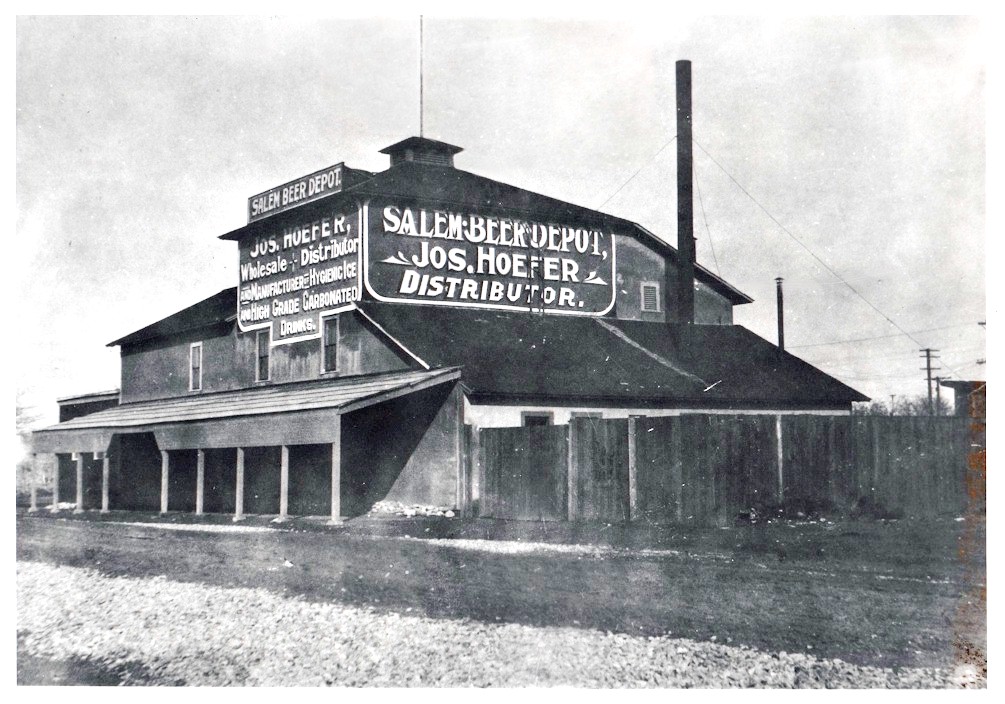
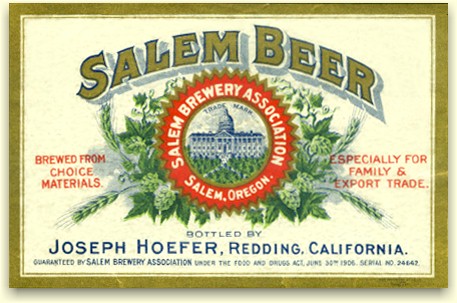
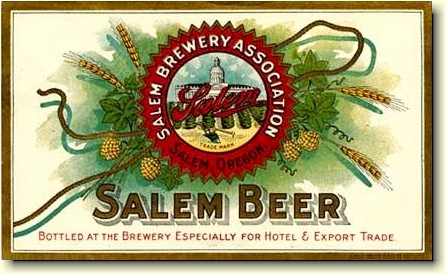
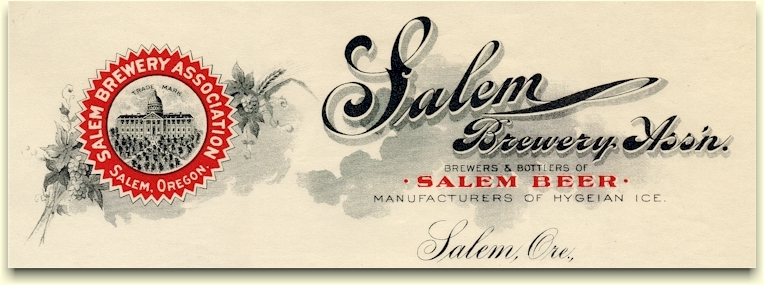
Salem Brewery Association
(1903-1915) On June 30, 1903, a new corporation was formed with L. F. Schmidt,
president; S. T. Zynder, secretary and manager; and E. Eckerlin,
treasurer.
Both Frank G. Deckebach, and Kola Neis, were also a major
stockholders and would become office holders in the firm. The new company
immediately set about to increase the capacity of the plant to 10,000
barrels/year, to double the capacity of the ice plant, and to add a
bottling house with a capacity of 150 dozen/day. With the addition of a
Southern Pacific rail head and the plant upgrades, Schmidt proceeded to
make the old Capital Brewery & Ice Works the center piece of his new
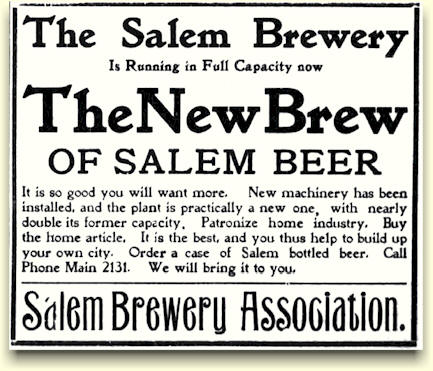
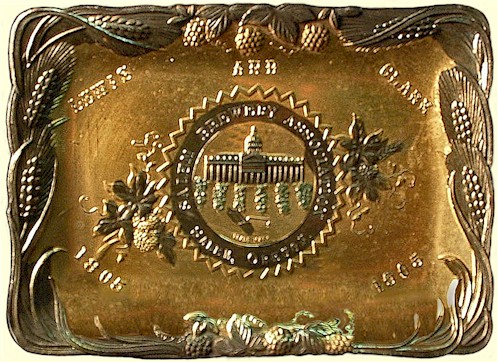
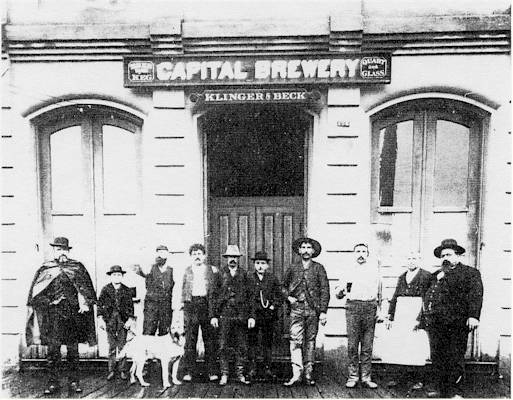
Salem Brewery Assn. Upon assuming control of the Salem Brewery, Schmidt placed these ads in the Capital Journal: "As it takes some time to place our product in the market, and wishing to get started in business and in touch with the people of Salem and vicinity, we made arrangements to handle the Olympia and Bellingham brews, both so well and favorably known to the people of the Pacific Coast. Our prices will be the same as that of the local breweries, and the service we will endeavor to make satisfactory." Leopold Schmidt invested heavily in equipment upgrades and increased the plants capacity. To supervise this new branch operation, Schmidt sent one of his most trusted associates, Frank M. Kenney, who had been Olympia's secretary. Kenney became the brewery president, with Frank Deckebach, vice-president. In late 1903 the plant improvements were completed. Newspaper ad, 17 Oct. 1903 In 1905 there was a worldwide exposition to celebrate the centennial of the Lewis and Clark Expedition. Officially known as the Lewis and Clark Centennial, American Pacific Exposition and Oriental Fair, the event opened in Portland, Oregon on June 1, 1905, it ran four and a half months, closing on October 15, 1905. Numerous Breweries had exhibits to display their products, and give out free samples and souvenirs. Leopold Schmidt took this
oportunity to promote his Olympia Brewery, as well as, his new Salem
Brewery. Below is a copper dish that the Salem exhibit gave to the public.
In 1906 the brewery's secretary was William Schuldt, but with the startup of the Acme Brewing Company in 1907, Schuldt was sent to San Francisco to oversee that operation as secretary/manager. Accompanying Schult was a young graduate of the Wahl-Henius Brewing Institute, J.P. Rettenmayer, who had been with the firm for only four months. Kenney and Deckebach continued to manage the plant until state-wide Prohibition closed the brewery in 1915.
 In
1910, construction was started in Salem on a new brewhouse, followed by a
lagering (cellar) building, modern cooker, kettle and tanks. They also
added a larger bottling works. In
1910, construction was started in Salem on a new brewhouse, followed by a
lagering (cellar) building, modern cooker, kettle and tanks. They also
added a larger bottling works.
By 1912 the Salem Brewery had been enlarged to a four story structure, and with their new building and equipment the Salem Brewery became one of the most modern on the West coast, with triple the capacity of the old plant.
|
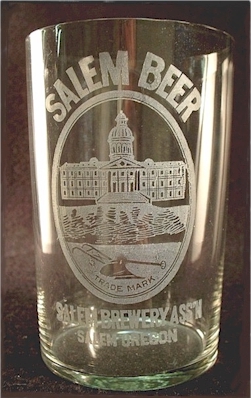 etched glass, ca. 1905 |
 1st tray - the "Green Salem" ca.1903 |
 etched glass, ca.1907 |
|
|
|
|
|
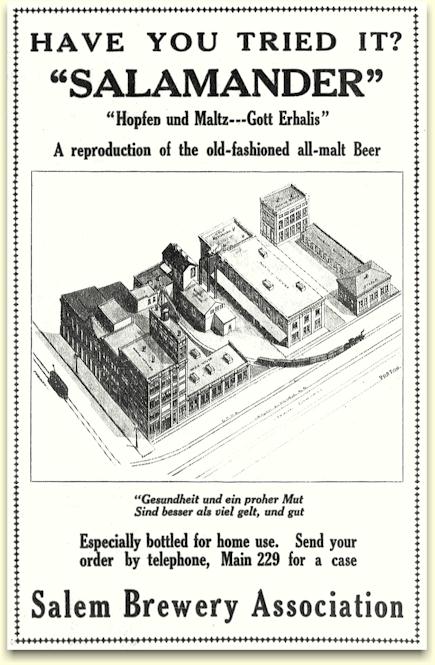
The German saying below "Salamander" in the ad above translates to: "Hops and Malt, may God preserve them." The saying below the image of the brewery translates to: "Good health and a happy disposition are better than much money and possessions." It should be noted that the image of the brewery takes a bit of artistic license with reality. The back three rows of buildings were not part of the brewery - if they actually existed at all. Unfortunately the Salamander brand didn't have a chance to gain a following since the voters of Salem voted in Prohibition measures that would soon cripple the Brewery.
In
June of 1915, the Salem Brewery Association incorporated the
rest of the plant as a division of Olympia's Northwest Fruit
Products Company. The principals were
Frank Deckebach,
Kola Neis, and Frank T. Schmidt (Leopold's second son).
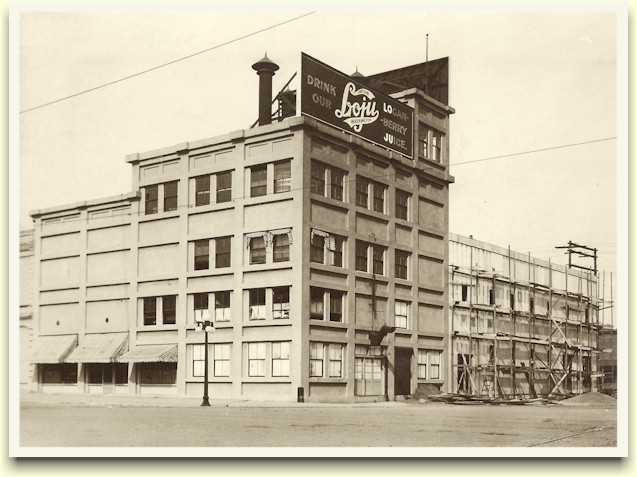
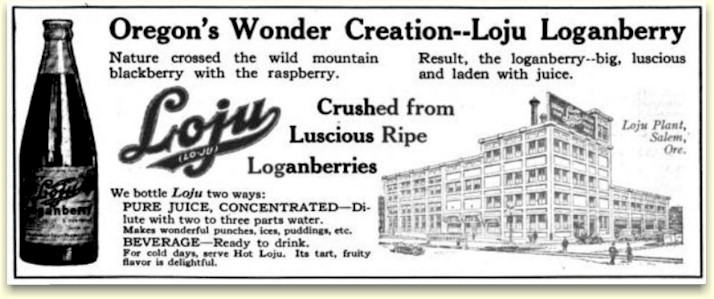
That year they began marketing a loganberry fruit
juice called Loju. By the end of 1915 it was being distributed as
far as California and the Southwest.
Loju
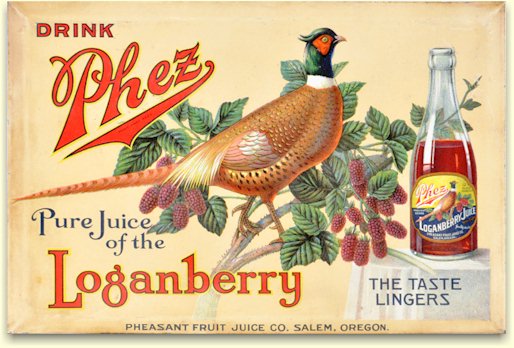
had a competitor in the Pheasant Fruit Juice Co., makers of "Phez."
So, in January of 1918 the two companies merged to become the
Pheasant Northwest Fruit Products Company, dba the Phez Company.
By June, 1919, they added a new plant and added Jams & Jellies to
their product line. However, by 1927 they appeared to have fadded
from the scene and none of their products appeared in newspaper ads.
Frank Schmidt was general manager of the Louju plant, and after the
merger he served as vice president of the Phez Company. After the
Loganberry venture collapsed Schmidt began planning for the end of
Prohibition. Deckebach and Neis' Marion Creamery continued operating
their section of the plant until 1933,
when the entire plant was purchased and re-opened as a brewery. The
creamery business was then moved across the street and carried on as
before. |
After Repeal
in April of 1933, the Salem Brewery Association re-incorporated, but no
longer as a holding of the Olympia Brewing Company. However, it was purchased
by a member of the Schmidt family. Frank T. Schmidt returned,
along with Kola Neis and other local investors, to raise the capital for starting
up
the brewery again. Neis was president, with Schmidt as general manager.
He had earned his Master Brewer certification on 31 March, 1905, but
chose to hire another brewmaster for the daily operations so that he might
devote his time to the business end of the company.
The effects of the Depression were still being felt, and
this was still a period of economic adversity, but the company managed to
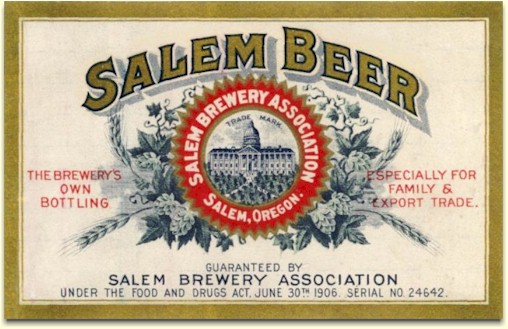
hang on as a regional brewer. In addition to his flagship Salem Beer (below),
Frank produced a
Schmidt's Salem Beer.
This scarcity may also due to the fact that the brand was not
widely distributed, and was no doubt gone by 1936. It was that year that Frank
Schmidt lost an arm in an industrial accident which may have been a factor in
his leaving the company in a January '37 reorganization. Frank returned to
Tumwater where he ran the Bottling Shop of his family's Olympia Brewery until his death in 1948. "When you opened a bottle it foamed over the top. The
cause was a damaged tank lining, we first patched then replaced it.
Because of that problem, sales had suffered markedly."
Even when problems are
corrected, bad reputations are difficult to live down, and lost patrons
rarely return.
This half gallon version was introduced in 1942, to promote saving of the
metal caps due to war time shortages.
In 1938 they
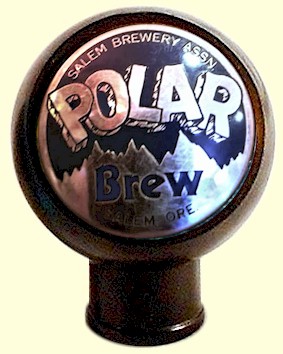
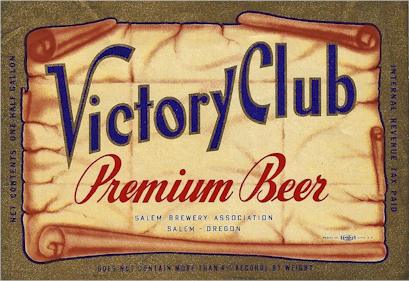
introduced both the Polar Brew and Victory Club brands of beer.
Supporting your local businesses
apparently wasn't a concept at this time - as 82% of the beer consumed in
Oregon was from out-of-state. Consequently, new management and a few new
brands was not enough to gain market share on the imports, and the brewery
remained in financial difficulties.
In August of 1938, San Francisco interests took over the
management of the brewery. This was the firm of Bauer & Schweitzer, a major
supplier for breweries, who were a majority creditor/investor in the brewery.
But their new president, Louis Lachman, was no more successful in getting the
business back on firm financial footing. Lachman was a hop broker, and no
doubt another creditor. In January of 1940, George Stackman announced the
withdrawal of the San Francisco backers and he assumed control of the firm.
The 1942 City Directory listed the Salem Brewery Assn. with its officers
as George W. Stackman, president; Rene Besse, vice-president and general
manager; and Ernest R. Kunney, brewmaster. Ernest was also the
secretary-treasurer as well as a director of the brewery, having been elected
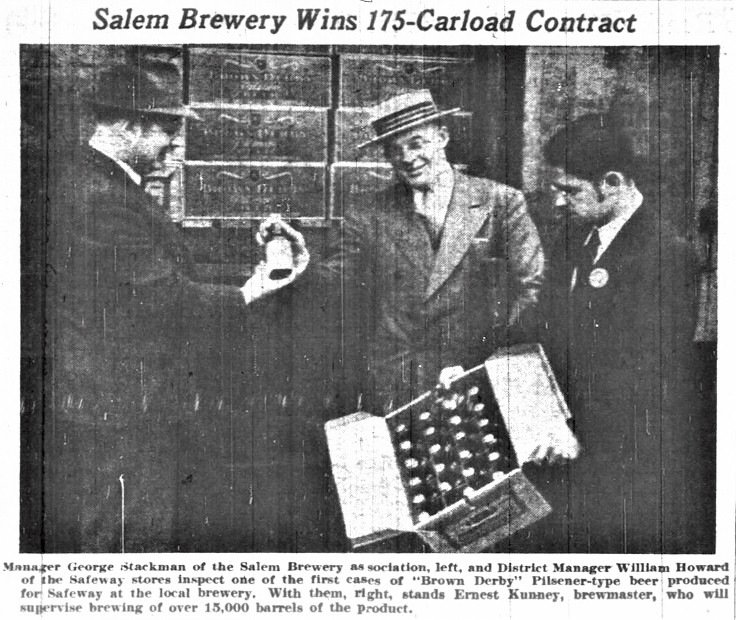
to these positions in 1939. Salem was also one of the few brewers who contracted to brew
Brown Derby for the Safeway market chain in 1940. In June of '40 the
Statesman Journal reported the Salem Brewery Assn. had landed the
contract. Salem bottled, as well as
canned Brown Derby Beer. See example of can in close-up (below) and with
other cans further below.
Another opportunity to increase Salem's production came in
'42 from the Silver Springs Brewing
Co. of Port Orchard, WA. Since Silver Springs didn't have a canning
line they contracted with Salem to produce and can their Oldstyle Pale Export.
This product was already in the Portland market, but only in bottles. An
example of this rare can can be seen in the close-up (above) and
again below. These
contracting arrangements were short lived since the Salem Brewery was
soon to have new management who wasn't party to these aggrements.
Salem Breweriana
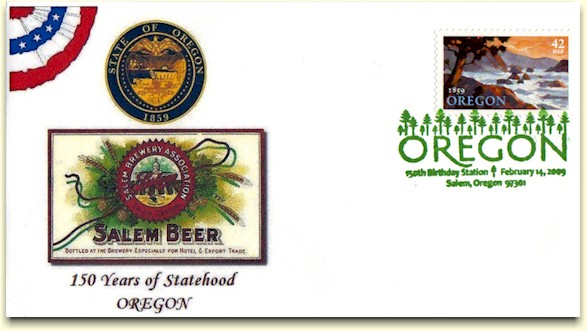
On 14 February, 2009 The US Postal Service
issued a First-Day Cover comemorating the 150th anniversary of Oregon's
statehood, and they chose to grace the cover with a label from the
venerable Salem Brewery Assn. of the capital city of Salem.
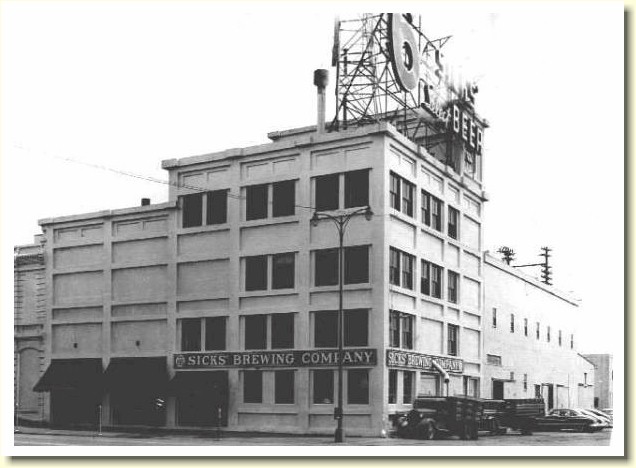
The new Salem branch was completely renovated, and
repainted in silver and blue. Additionally, production improvements, in
the form of new storage tanks, doubled its previous capacity, and a new
bottling plant enabled filling 2000 cases per day. The modernized
brewery then commenced production of the Sicks' Select brand of beer. This brand
was also being produced for the Seattle market in the old
Horluck Brewery, purchased by Sick in 1939, and renamed the Century
Brewery. Emil Sick and his father, managed their brewing empire out of
Lethbridge, Alberta, and with the promise of Repeal, moved into the U.S.
market. They first bought breweries in Great Falls and Missoula, Montana,
then moved on to Washington state with Spokane, and Seattle. Now they had
a presence in Oregon. Floyd W. Shepard, of Lethbridge, received an offer from Emil to come to
the U.S. and join them, which he did in November 1933. Floyd was then made
co-manager of SeaBrew, and with the 1939 acquisition of the Horluck
Brewery, manager of that plant as well. With the 1943 purchase of the Oregon plant, Shepard moved his family to
Salem and relieved Rene Besse as manager of the Sicks' Brewing
Company. He occupied this position until December of 1951 when the
company's board of directors promoted him to executive vice president of
the firm. He was placed in charge of sales, with offices to be located in
Portland. Brewmaster, John A. Meyers was also involved in the initial phases of
the Salem plant. Originally from Minneapolis, he moved to Canada as a boy.
He later joined the Edmonton Brewery and worked there until 1942. That
year he studied brewing at the Siebel Institute in Chicago, which was
followed followed by a six month stint as asst. brewmaster at SeaBrew
prior to assuming the duties of brewmaster in Salem. In 1949, Steve A. Tabacchi replaced John A. Meyers as Salem's
brewmaster. A native of Lethbridge, Steve had family connections with the
Sicks' which enabled him to gain a position at SeaBrew when he emigrated
in 1934. After completing the brewmaster course at the Wahl-Henius
Institute in Chicago in 1938, Steve returned to Seabrew as an assistant
brewmaster, and nine years later was elected president of the Northwestern
District of the Master Brewers Association of America. Steve Tabacchi's assistant, William Weiss, also transferred from
SeaBrew's Century plant. William was the youngest son of Hans H. Weiss,
Seabrew's brewmaster at the main plant.
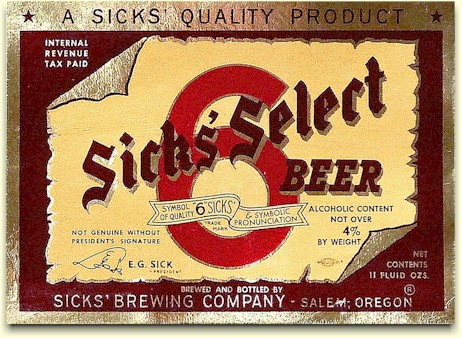
The graphics on the label above had been used since April of 1944, and
in 1949 Emil Sick decided to give the label a new look. He hired Walter
Landor of San Francisco, who came up with the design shown on the label
below. It was introduced in July of '49.
This was Landor's first work with a beer label and it earned him
a design award in '49. The following year Landor re-designed the famous,
red "R" on the Rainier label. Landor went on to work on other brewer's
labels and in '57 he
he updated
Lucky Lager's distinctive red "X" logo with stylized hop
leaves.
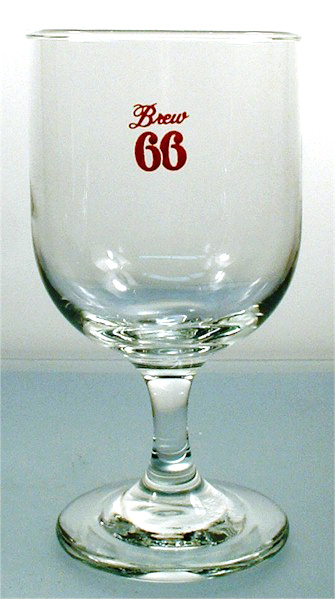
In July of '51, Brew 66 was launched, and production commenced at both
the Century Brewery and the Salem brewery.
On 22 July, 1953, the
Rainier Brewing Co. of SF was purchased by Emil Sick,
who then sold the plant to the Theo. Hamm Brewing Co. of MN,
retaining sole rights to the Rainier brand. He had been trying
acquire rights to the brand since his 1935 licensing agreement with
Rainier CEO, Louis Hemrich.
With the closing of the plant, Steve Tabacchi then established a Sicks'
distributorship, marketing Brew 66, Rainier Beer, and the soon to be
discontinued, Sicks' Select.
He was able to utilize the brewery buildings for his office and
warehouse, however, in September 1955, a little more than two years
after brewing was terminated, the four story Salem landmark was razed.
Article by
All contents including images are copyright by BreweryGems.com

Salem Brewery Association
(1933-1943)
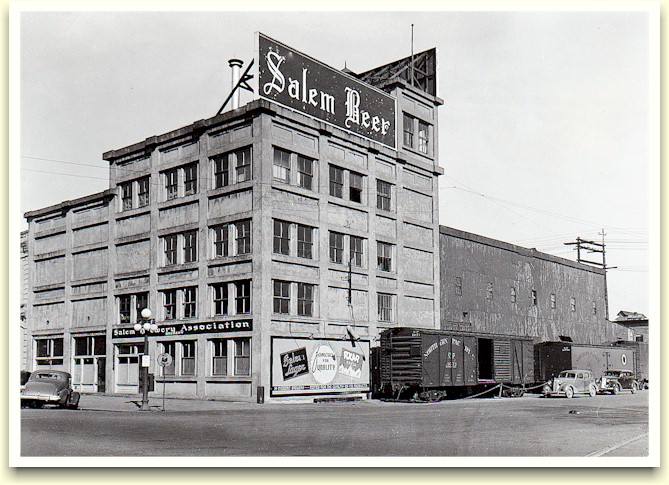
Salem Brewery, ca.1940 - photo
courtesy of Brewmaster, E.R. Kunney
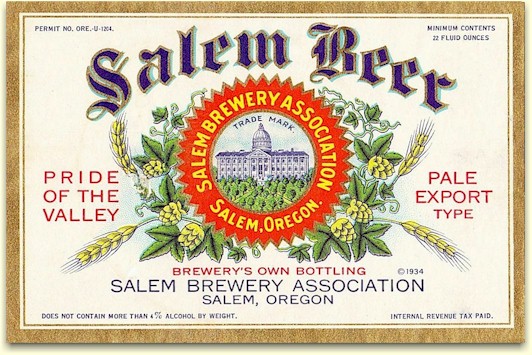
Salem label c.1934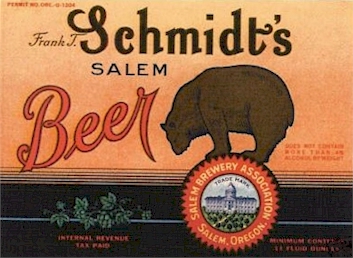 Three variations of this label
are known: the brown bear (right), a black bear, and a white
bear - probably to differentiate three different styles of beer. However,
he must not have marketed the Schmidt brand heavily since only a couple of
old bottles are known to exist with these labels (one black bear & one
white bear), nor are there any promotional items known that show the bear
motif.
Three variations of this label
are known: the brown bear (right), a black bear, and a white
bear - probably to differentiate three different styles of beer. However,
he must not have marketed the Schmidt brand heavily since only a couple of
old bottles are known to exist with these labels (one black bear & one
white bear), nor are there any promotional items known that show the bear
motif.
Frank's brewmaster also left in '37. By March his position had been filled by
Ernest R. Kunney, a German born brewer previously with the
Rainier Brewing Co. of San Francisco. He recalled that upon his arrival
the brewery was dealing with a "wild beer" problem. As he explained it:
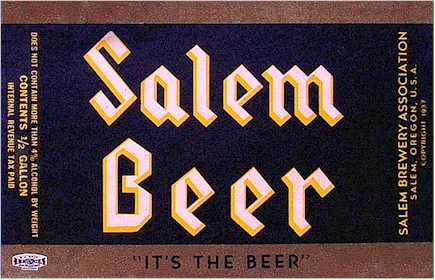 After Schmidt's departure the new management attempted to
generate additional business with some new products. In 1937 the steinie
bottle was introduced and with it this new, more modern style label was
adopted.
After Schmidt's departure the new management attempted to
generate additional business with some new products. In 1937 the steinie
bottle was introduced and with it this new, more modern style label was
adopted.
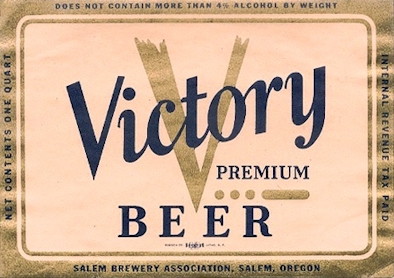
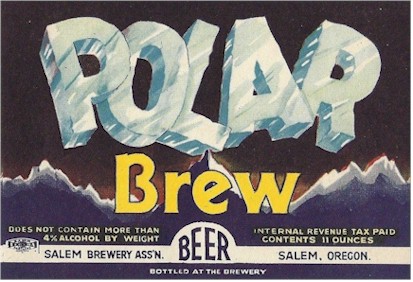 Six months following the
outbreak of WWII they added Victory Beer, but kept the Victory Club brand as
well.
Six months following the
outbreak of WWII they added Victory Beer, but kept the Victory Club brand as
well.
They also marketed a Yankee Beer for a short while. Another brand from
this period was Balco Beer but rather than a Salem brand it was a
contract brew for a market chain. They also made Columbia Club for a
Portland beer distributor.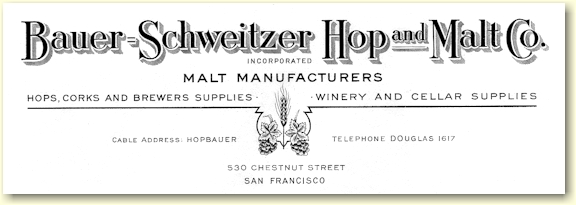
When the Rose City Brewing Co. of Portland closed in 1940 the Salem Brewery
Assn. acquired the rights to their Gambrinus and Beaver State brands of
beer. In a 1942 photo of the firm's office (below) you can make out
five of their products on the counter behind E. R. Kunney, brewmaster (left)
and G. W. Stackman, pres. (seated).

Salem office

close-up

Brewmaster in brewery lab
The brewery struggled on, with the added burden of increased
war time restrictions and rationing. Finally, in October 1943, the brewery was
sold.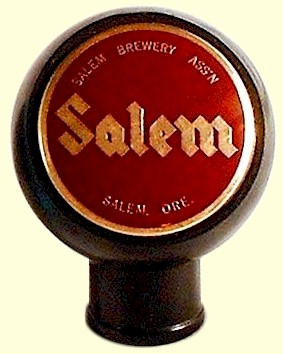
Salem Brewery Ass'n. ball tap knob
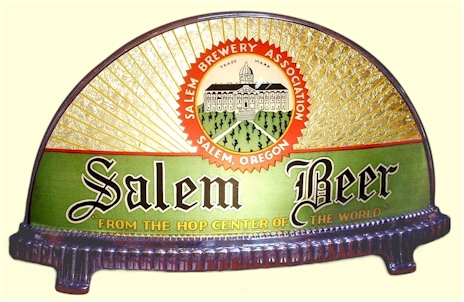
Back- bar lights by Gillco of Philadelphia, PA - ca.1935.
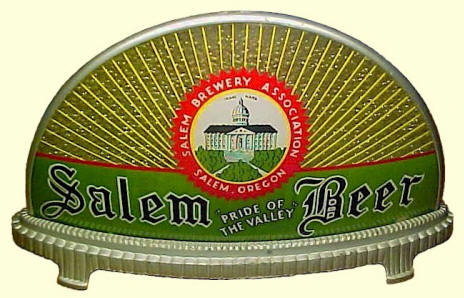
Affectionately referred to as "cab lights" by collectors.
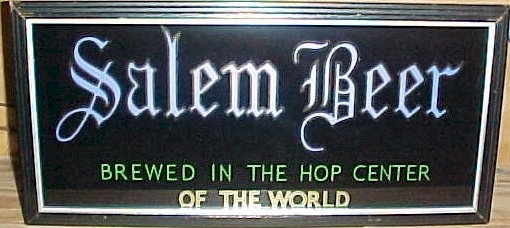
lighted, box sign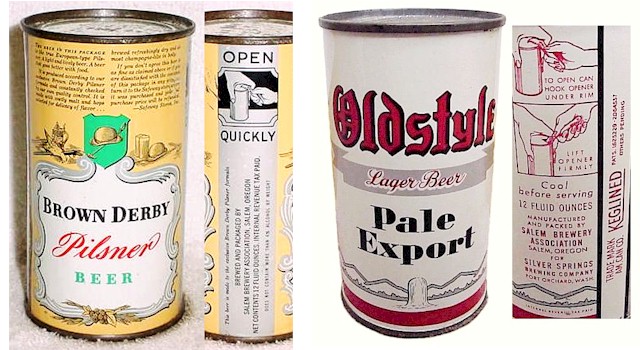
Brown Derby &
Oldstyle beer cans with opening instructions
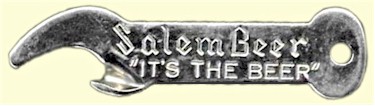
This cap lifter clearly
shows that the Salem Brewery is no longer a branch of the Olympia Brewing
Co.
To counter Olympia's famous slogan:
"It's the Water" they used:
"It's the Beer"
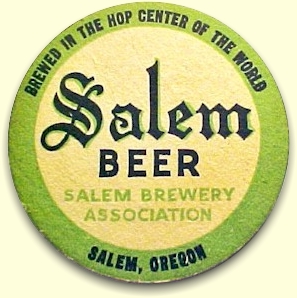
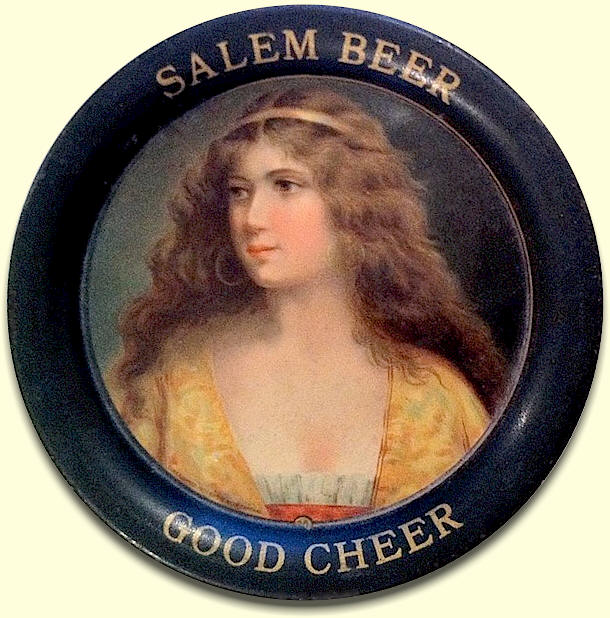
beer coaster
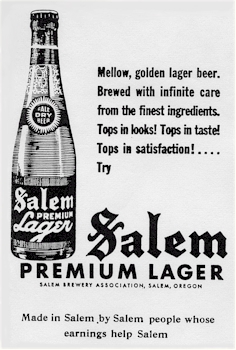
Newspaper ad shows updated Salem Beer label, introduced in Sept. 1939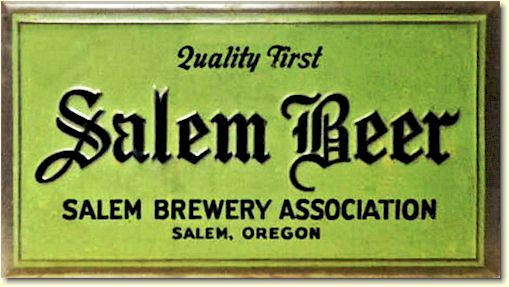
Salem Beer tin-over-cardboard sign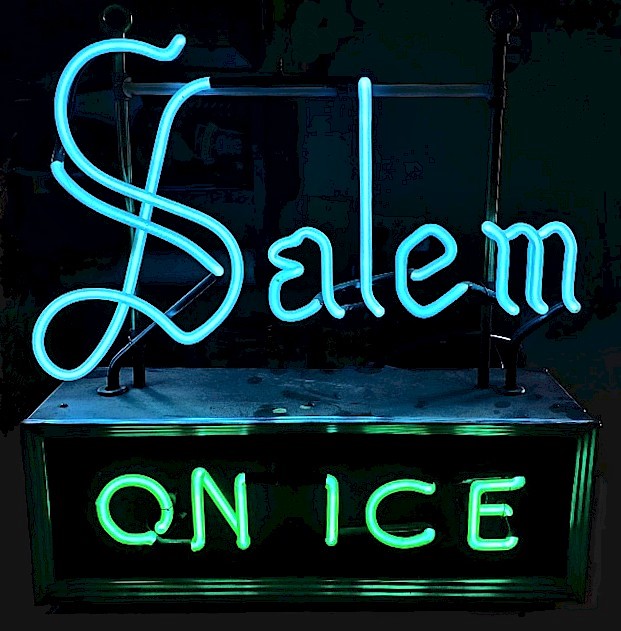
"Salem on Ice" neon sign c.1935 - Franco collection
g
Company
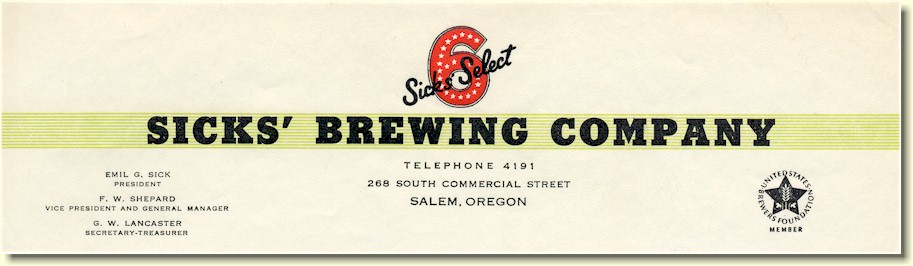
Sicks' Brewing Company
(1943-1953)
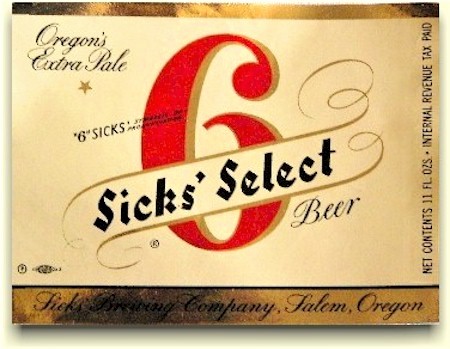
In early 1951, the formulation of a new product was perfected in the
Century plant. It was test marketed in the Seattle area from March to June
of '51, and touted as the "new taste of Sicks' Select."
A separate sales organization was formed for the new brand and it proved
to be a marketing success.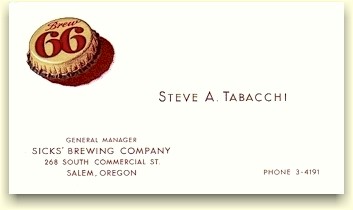
Tabacchi's supervision of the plant was cut short when Emil Sick decided
to close the
brewery on June 1st of '53. At the time of closing, there had been 70
workers on the payroll of the plant, which produced 75,000 barrels - 27
million bottles - yearly. It was said that Salem lost a good industry
and a good beer.
The 1935 agreement gave him the right to market Rainier Beer in
Washington and Alaska, but not in Oregon. Sick later admitted that he
would not have closed the Salem brewery had he foreseen the subsequent
acquisition of the famous Rainier mark, and the ability to grow the
brand in Oregon.
Sicks' Select and Brew 66
Breweriana
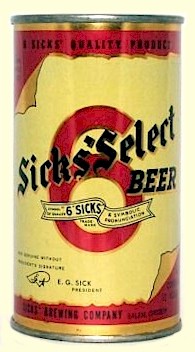
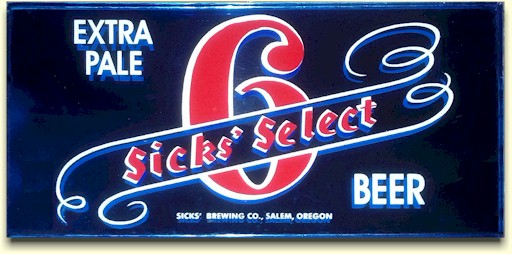
Sicks' Select
reverse-on-glass sign
 Sicks' Select back-bar "chalk" - ca.1949
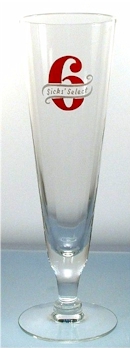
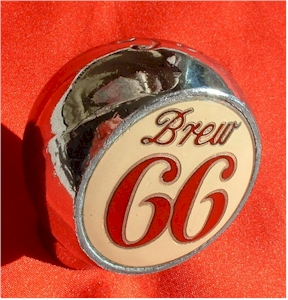
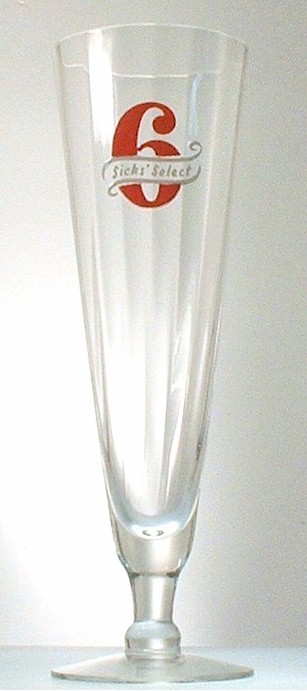
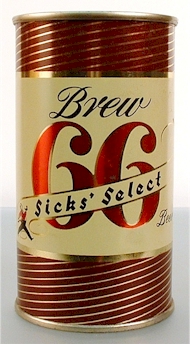
beer glass, ca.1949; chrome, ball tap knob
and beer can - both ca.1951
SALEM & SICKS'
COLLECTIBLES - For Sale
ACKNOWLEDGEMENTS

and can not be used without permission from Brewery Gems.
Copyright © 2004 ~ All Rights Reserved.