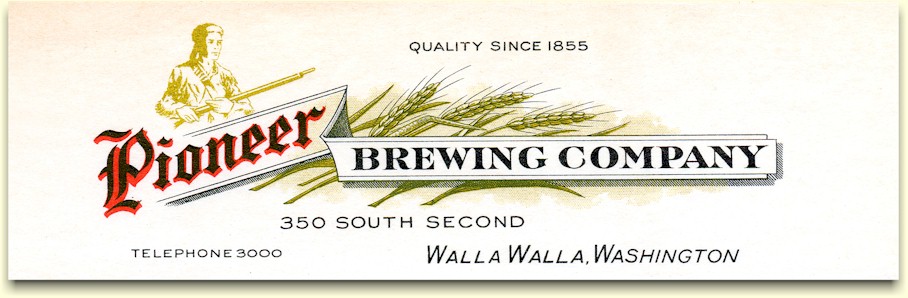
| As the
date on the letterhead indicates, this brewery has had a long and
illustrious history and was one of the oldest breweries in Washington.
However, the 1855 date is questionable. The discussion of the brewery
will follow a time-line starting with Emil Meyer's City Brewery
(1860-1870). But the brewery's beginning is really the tale of two
brewers - Emil Meyer and Joseph Hellmuth. In fact the brewery's first
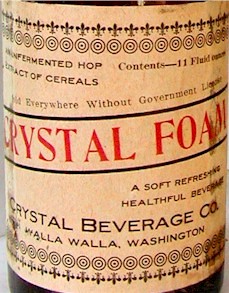
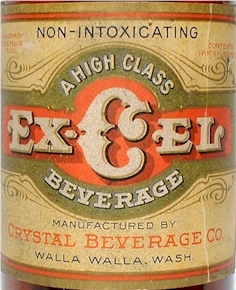
owner may have been Hellmuth rather than Meyer. The 1910 merger with Jacob Betz Brewing & Malting resulted in the company doing business as the Walla Walla Brewing Co. (1910-1925) and the Crystal Beverage Co. (1916-1925). Then in the midst of Prohibition, Peter Marinoff purchased the brewery and operated as the Washington Brewing Co. (1925-1933). Upon Repeal the plant became the
Northwest
Brewing Co. (1933-1936), still under the management of Marinoff. In
1936 the business went into bankruptcy due to a labor dispute, and the
following year the Brewery Workers Union bailed it out and named it the
United Union Breweries Co. (1937-1944).
Emil Meyer's City Brewery
|
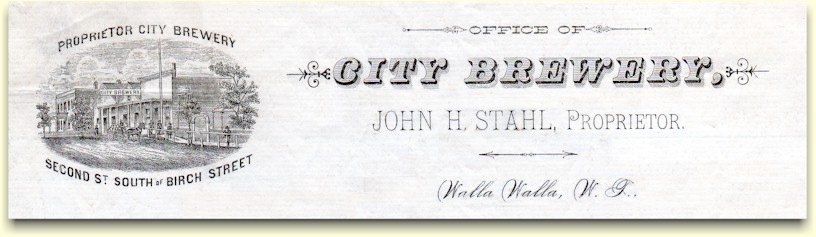
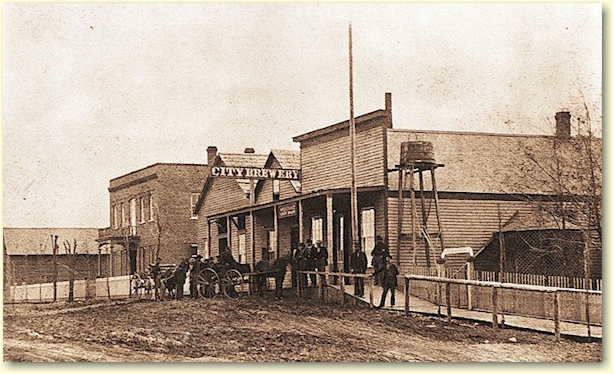
Stahl's City Brewery, ca. 1872
Courtesy Whitman College Archives
|
John Henry Stahl was born November 14, 1825 in Holstein, Prussia (Germany). He arrived in San Francisco in 1858. By 1860 he and a German immigrant from Hamburg, Ernest Scholl, have established a grocery business in the gold rush township of Kelsey, El Dorado County, CA. In 1862, he and his bride of two years departed for the Oregon territory. In 1863, the partnership of Stahl & Solaro opened the
Canyon City Brewery on Washington St. in Canyon City, Oregon. Stahl soon
became sole proprietor and operated his brewery until 28 July 1870. On
that date he sold out to F. C. Sels. Stahl and family relocated 170 miles north to Walla Walla, accompanied by Ernest Scholl, who had worked with Stahl at Canyon City - and previously in California. Ernest continued working for Stahl in Walla Walla until 1878, when he and his brother Emil, established the Scholl Bros. Brewery in Pomeroy, W. T. They sold the brewery in 1884 and Ernst returned to Walla Walla. The following was written 5 years after John H. Stahl's
death (January 13, 1884) and is more about his widow, Catherine, than
him.
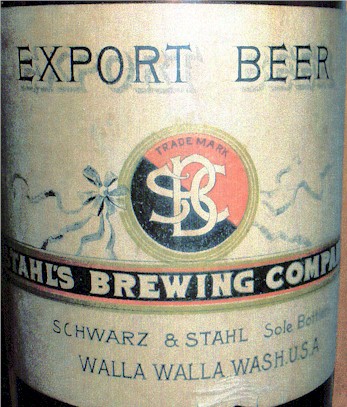
From the time the plant was established until 1888 steam beer was brewed exclusively, but after that lager was the beer of choice. The brewery was located at 2nd & Birch Streets. While the bulk of the brewery's output was sold by the keg to local saloons a portion was bottled for export to outlying regions. Prior to 1890 it was required that the beer first be put in kegs, tax stamps applied, and then if it was to be bottled the kegs were transported to the bottling house - which was often an agent/distributor. With death of the brewery's namesake, sons Ernest and Henry (John Henry, Jr.) took a more active role. Unfortunately, in June of 1886, Christine's eldest son, Ernest, died at the early age of 24. Henry was now in charge, not only helping in the brewery, but also partnering with local saloon keeper and liquor agent, Adolph Schwarz, in a bottling business. They took care of the brewery's bottling needs, as well as taking other bottling contracts. One of their labels is shown below.
In May of 1894, Adolph Schwarz made became further involved with the Stahls, when he took Henry's sister, Lulu, as his wife. This move would prove to be fortuitous for Schwarz, as Lulu was destined to become one of the wealthiest women in the state. In May, 1897, Adolph's partner and brother-in-law, Henry Stahl, died of Bright's disease (kidney failure), making Adolph sole proprietor of the bottling works. It also left Henry's younger brother, Frank, as the last son to help Catherine with the brewery. |
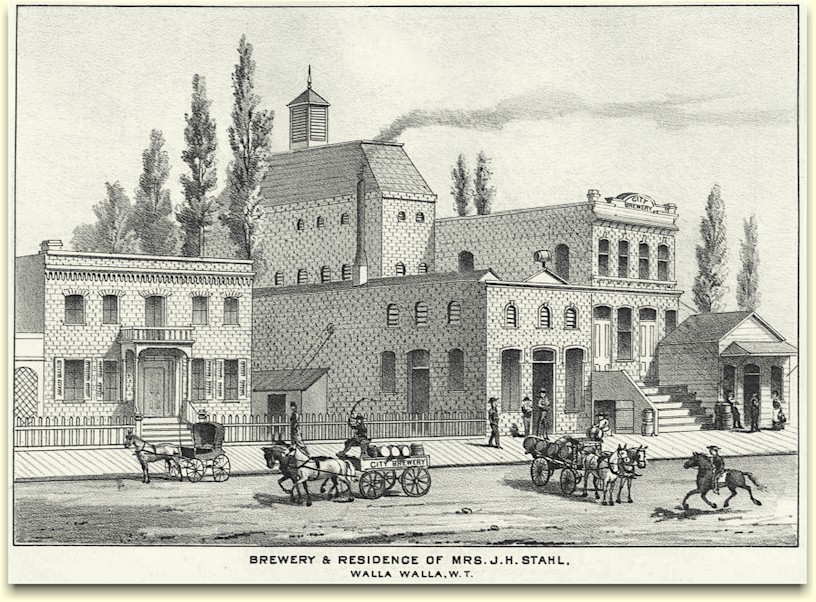
(1904-1910)
| On
October 13, 1904 the plant was incorporated as the Stahl Brewing and
Malting Company. The new corporation was capitalized at $100,000.
Waldemar Stockder was their brewmaster and plant superintendent, as
well as a stockholder. Their flagship beer was Kloster Braü and it continued as their primary brand after a reorganization in 1916. The brewery also produced a lager, which they called Our Special Brew - which lasted only six years, until 1910.
|
|
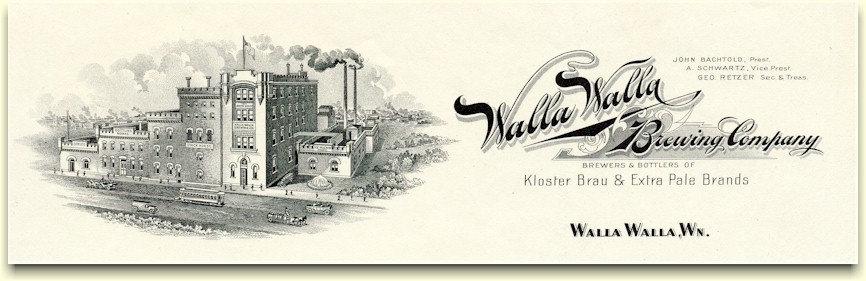
On April 1, 1910, the Stahl firm was consolidated with the
Jacob Betz Brewing Co. The
plan was to close the Betz plant, and once a new, larger brewery was
constructed, to close the Stahl plant as well. The new plant was to be erected
at 346-350 So. 2nd St. Catherine Stahl had died on April 16, 1908, leaving her
son, Frank Harmon Stahl, the Brewery's vice president. He was to be the last family
member directly involved in the operation of the company. With Frank's
unexpected death on 28 Oct. of the following year, his sister, Mrs. LuLu Schwarz, inherited the
bulk of their mother's estate. The following year, Lulu's husband,
Adolph, became a major stockholder, and vice president of the newly
formed Walla Walla Brewing Co. |

from the Bryan collection
Crystal Beverage
Company
|
|
|
|
|
|
|
|
|
Washington Brewing Company
At that time the capacity of the plant was 50,000 barrels of beer a year but new steel vats were installed and several new cellars constructed which increased the capacity to 100,000 barrels annually. |
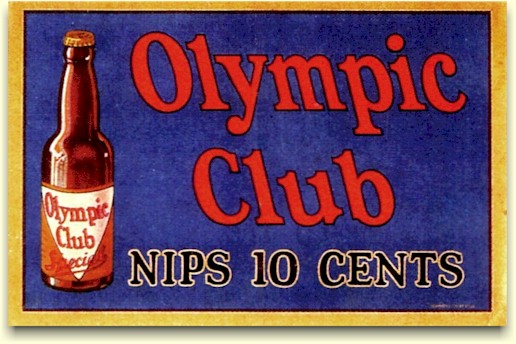
cardboard sign offering
near-beer in 7 ounce bottles, ca.1926
|
|
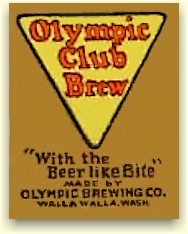
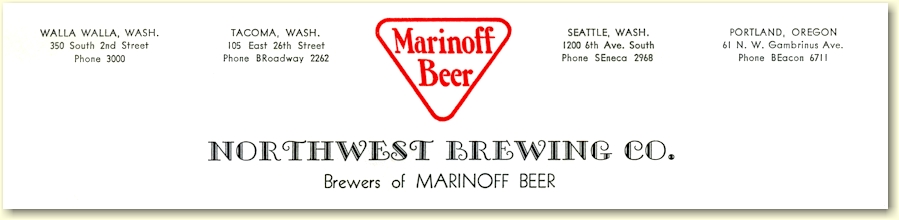
Anticipating the end of Prohibition, Peter Marinoff established the Northwest Brewing Company, Inc. on 10 February, 1931. His new corporation raised money to refurbish the old Washington Brewing Co. and to remodel an old meat packing facility in Tacoma for for the purposes of brewing. The plants were simply named, the Northwest Brewing Co. - Tacoma, and the Northwest Brewing Co. - Walla Walla. Marinoff also attempted to reopen Portland's old Gambrinus Brewery, but the plant never made it to production. By September of 1932, Olympic Club near-beer was also being produced in the Tacoma plant. However, it was soon to be replaced with real Olympic Club.
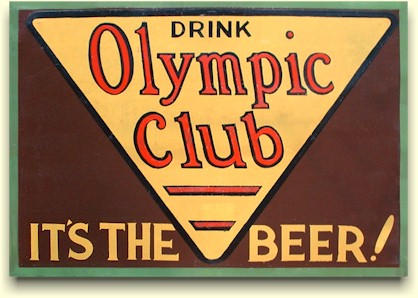 24" wide, tin beer sign, ca.1933
With the purchase of the Gambrinus Brewery in Portland, Marinoff now owned the brand, and with Olympic Club gone, both Gambrinus Beer and Marinoff beer (labels below) became his primary brands. He also produced a Cascade Beer, a Walla Walla Beer, and a Northwest Lager in the Walla Walla plant for the local market. However, his troubles were not over. A labor dispute with the Teamster's Union resulted in boycotts of his beer, and violence against his workers and clients. Trucks were hijacked and saloon windows broken, so he had to resort to armed guards patrolling the plants and riding shot-gun on his trucks. On January 18, 1935 the Northwest Brewing Co. of Walla Walla, Inc. was established. The following month the registered office for the Northwest Brewing Co. (Tacoma) was transferred to the Walla Walla plant were there was less violence. But the Union problems persisted, culminating in a shooting death of a Teamster in Tacoma. Peter Marinoff was convicted of "conspiracy to murder," but the conviction was subsequently overturned. However, the Teamsters were furious at this perceived injustice and vowed to "get" Marinoff. Fearing for his own safety, and that of his family, he fled to California. By mid-1935 the two plants were shut down and forced into bankruptcy. In early July, the Brewery Workers Union announced that they hoped to purchase the company and reopen the two breweries. |
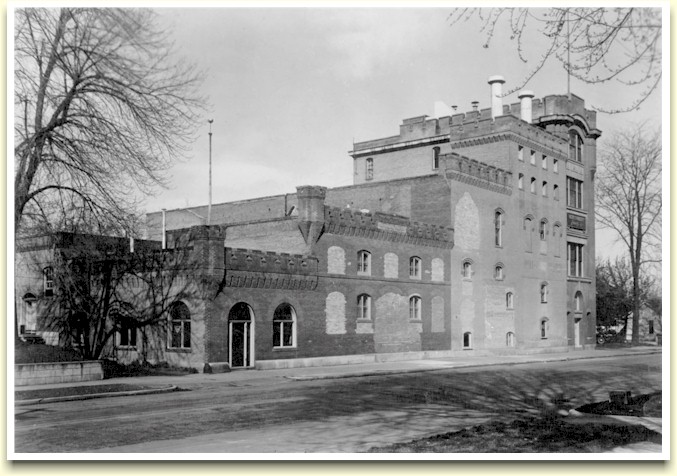
Northwest Brewing Company, ca.1935
Courtesy Whitman College Archives
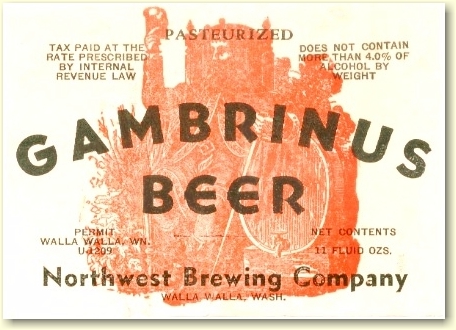
Gambrinus Beer label, ca.1933
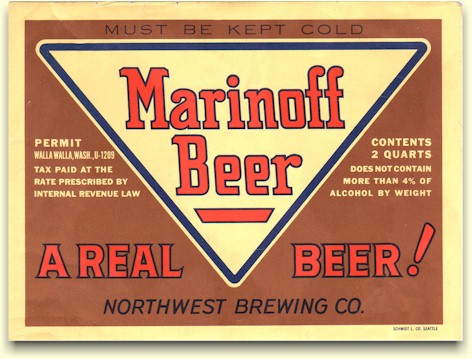
Marinoff Beer label, ca.1933

|
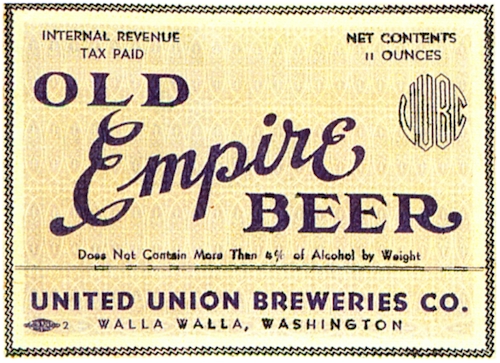
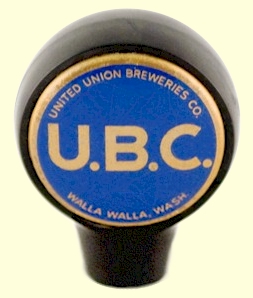
In 1936, the United Brewery Workers Union purchased the Northwest Brewing Company's two plants from the receivers for $27,000, and established the United Union Breweries Co. However, conditions in Tacoma were still too volatile and only the Walla Walla plant resumed operation. The label for their flagship beer is pictured below, and shows not one, but two union "bugs." In addition to their Old Empire Beer they also made an Old Empire Bock, a My-Te-Fine Beer and a UBC Beer. |
|
|
|
|
|
|
|
Mutual's Hartz brand of beer was now made in Walla Walla, as well as Silver Springs' DeLuxe Beer. |

Hartz Beer label, ca.1943
|
| In June of
1944, Williams Brothers purchased the assets, equipment, and brewing
formulas of the
Pioneer Brewing Co. of Aberdeen.
Operations at that plant were discontinued and the Walla Walla plant
carried on the activities of the three units - Ellensburg, Aberdeen, and
Walla Walla.
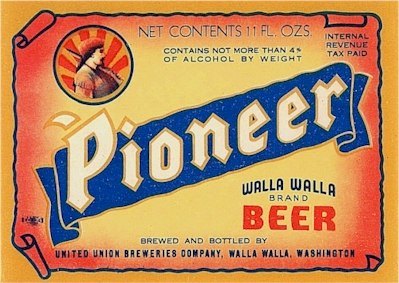
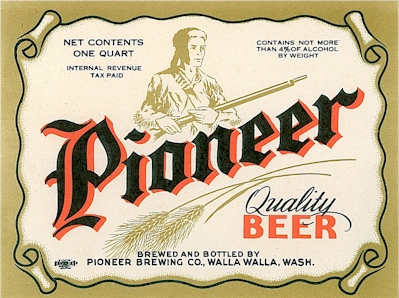
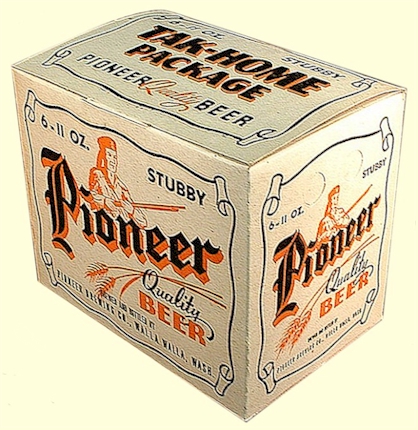
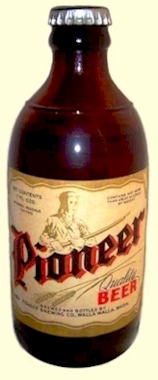
On March 29, 1945, the name of the firm was changed to the Pioneer
Brewing Co. They also changed the font on "Pioneer" - and made the frontiersman logo larger. The label shown
(below left) is from the period just prior to the firm's name
change. |
|
|
|
|
|
In 1945, more that $150,000 was been spent in a renovation and modernization program in the plant. A bottle house addition with a new bottling line twice as large as the one which had been used was installed. The old Aberdeen plant was kept so the company would have ample bottling capacity - but was never needed. While the manpower shortage was easing with end of WWII, grain shortages continued to plague brewers. |
|
|
|

Pioneer Beer, ball tap knob,
ca.1945
|
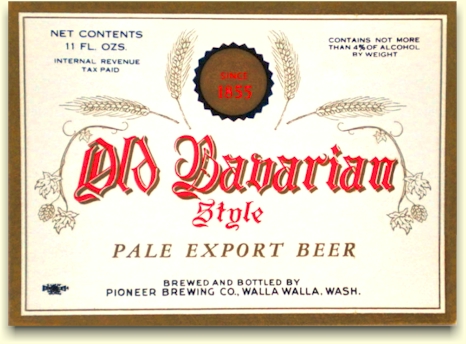
In August of 1945, the Williams Brothers purchased the Sunset Mercantile Co. of Wallace, Idaho. Initially they only produced an Ale under the Pioneer Brand (above). The ale market may not have been strong enough to keep the plant running at a sustainable level. So, in October of '46 they changed the name of the plant to the DeLuxe Brewing Co. and switched production to DeLuxe Beer. However the company was not doing well, and in July of 1947, the plant was placed into receivership. The company continued struggling but in January of 1949, in a re-organization of their various breweries, the Williams Brothers closed the Idaho plant and sold their Walla Walla plant. One of the Idaho brands that they acquired with the purchase of Sunset Mercantile was Old Bavarian (below) which they passed to the new owner of the Walla Walla brewery, W. D. Bryan.
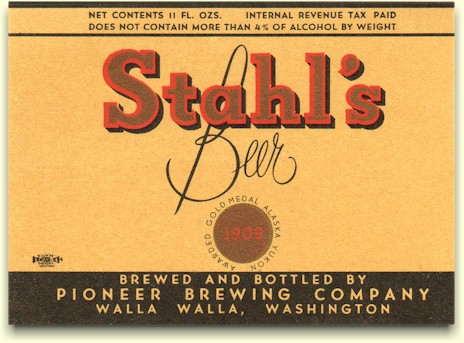
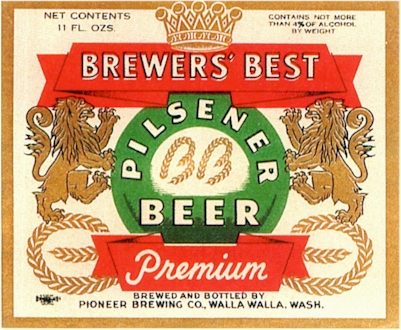
"Bryan, who is president and general manager, said the concern would start brewing this month under the supervision of C. L. Holtz, brewmaster. Holtz has been connected with several large eastern breweries and arrived in Walla Walla several weeks ago. While Bryan had purchased the Pioneer Brewery, the Pioneer brand was not part of the sale. Stahl had some local name recognition, but hadn't been in distribution since before Prohibition. He needed some real brand awareness, and he found it with Brewers' Best. Obtaining a franchise with Brewers' Best Associates, Inc. of NY, meant the brand was advertised nationally, but was produced by scores of small, regional brewers.
How this may have worked out for Bryan will never be known. In December of '49 the brewery was heavily damaged by fire, and while repair plans were made, the plant never re-opened. In 1954 the building was sold with the intention to make it into an office building. Those plans also languished and the building was eventually razed. |
Article by

|
|

All contents
including images are copyright by BreweryGems.com
and can not be used without permission from Brewery Gems.
Copyright © 2008 ~ All Rights Reserved.