
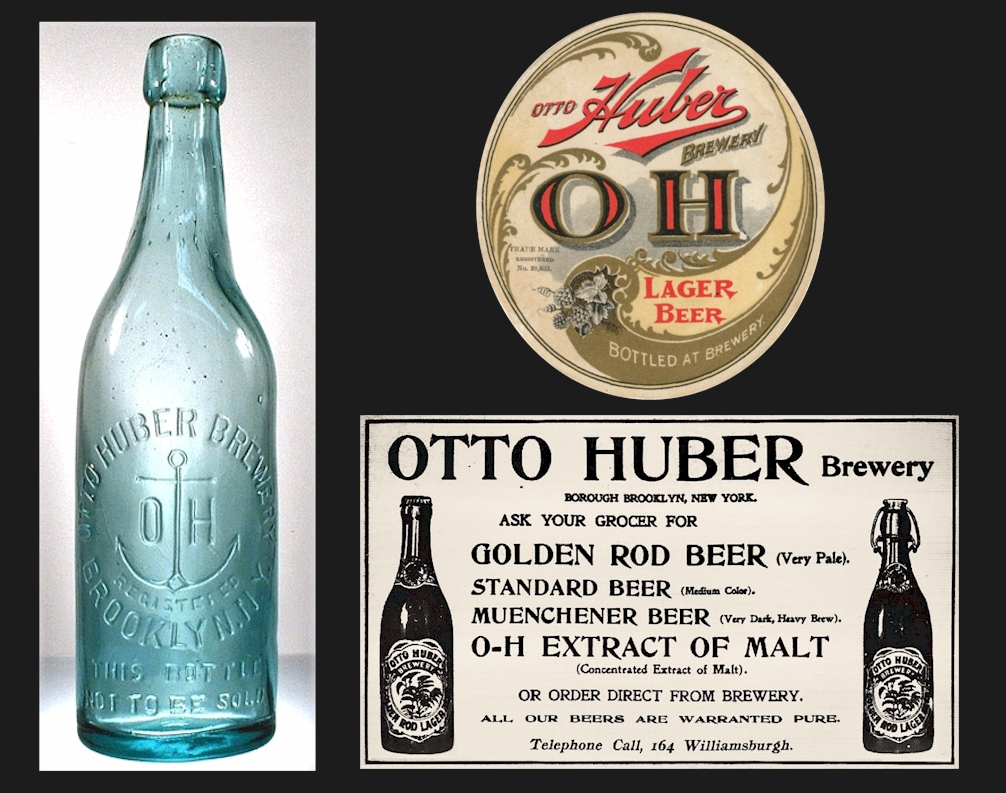
ArtiFact no.101: This Otto Huber aqua pint (ca.1890) is from a brewery that was built by Otto in 1868, at Bushwick Place in Brooklyn. Upon Otto's death in 1889, his son Joseph took control, and the company began doing business as the "Otto Huber Brewery."
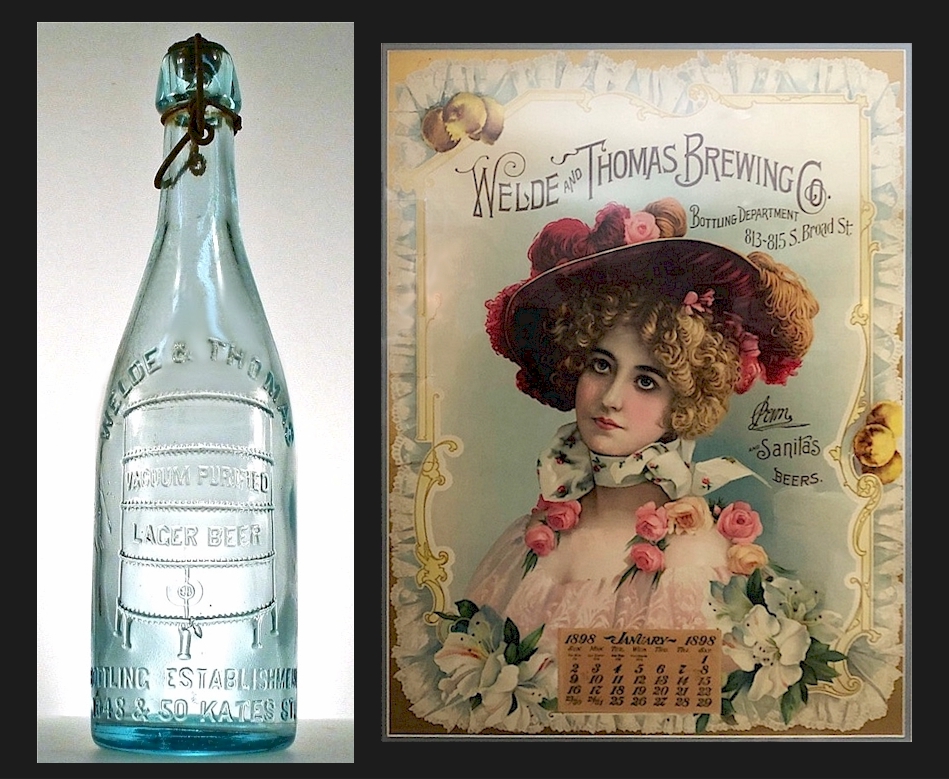
ArtiFact no.100: This Welde & Thomas pint bottle is unique in that it
displays a piece of brewing apparatus, suggesting that they employed
state-of-the-art brewing practices.
This Philadelphia bottle has a Kate St.
address, indicating that it dates from 1889 to 1897, when the bottling works
were moved to Broad St., as shown on the calendar.
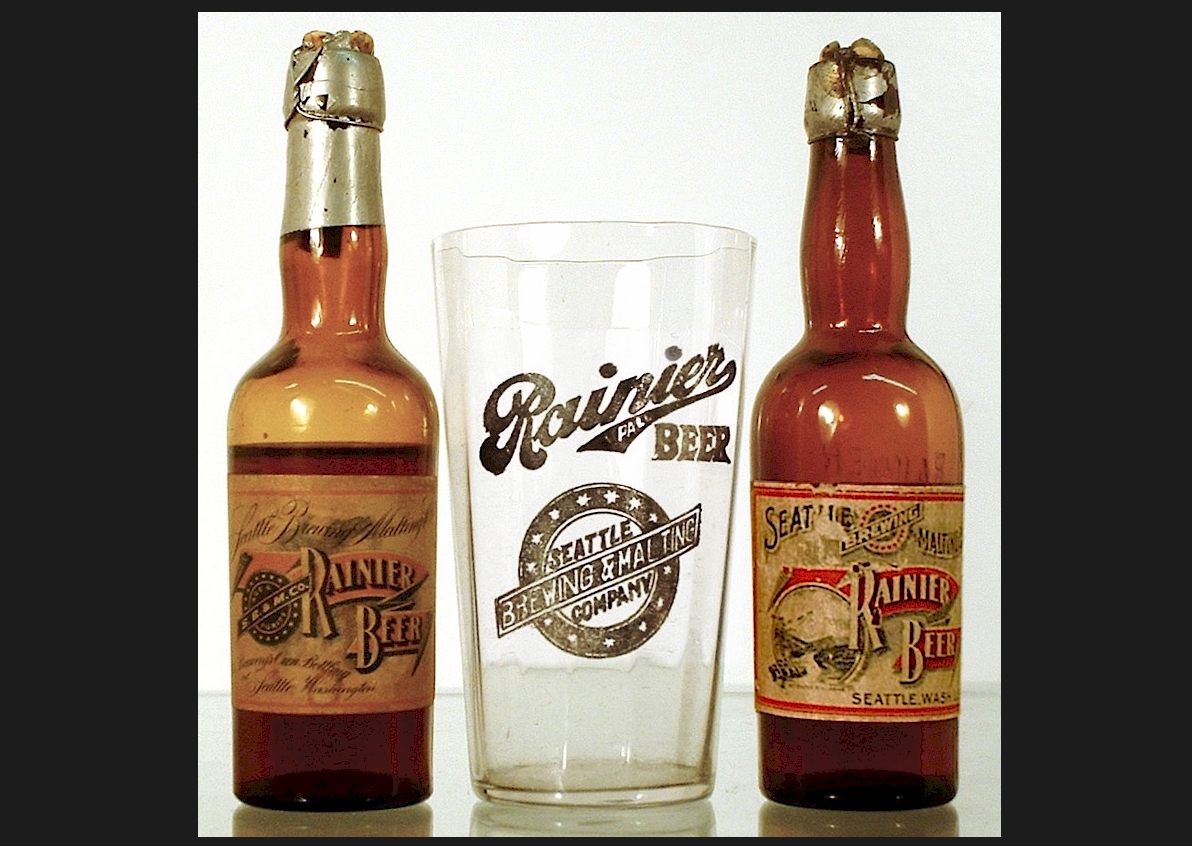
ArtiFact no.99: Two embossed souvenir bottles (ca.1895 & 1909), which were promotional items distributed after brewery tours and at public events like fairs and expositions. The glass is a paneled version (ca.1900).
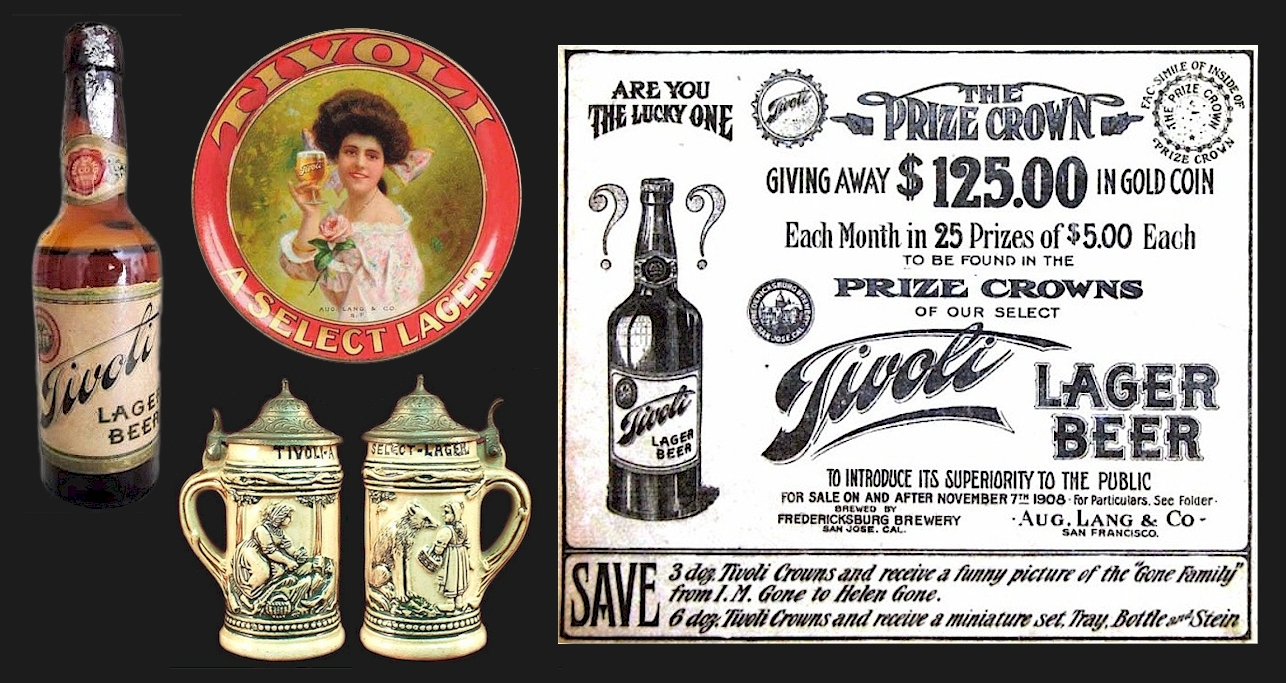
ArtiFact no.98: Here are three miniatures from Aug. Lang & Co's SF bottling
works. As can be seen in the last line of the November 1908 ad, the company had
a promotion that gave away a miniature tray, bottle and stein. The collectibles
shown here were the three items offered.
The tip tray is 4.25" in dia., the
bottle is 5.25" tall, and the stein is 3.5" tall.
For more on Lang, go to: August Lang Brewing Assn.
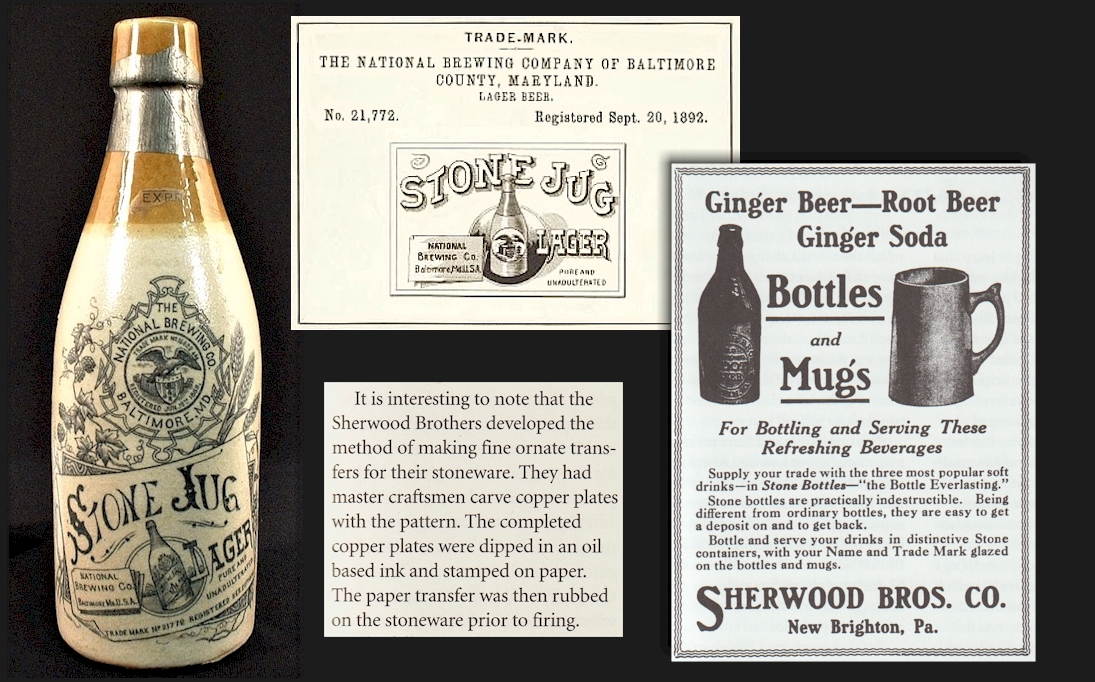
ArtiFact no.96: The National Brewing Co. of Baltimore (1889-1899) began
producing its Stone Jug Lager, circa 1892. The bottles were produced by the
Sherwood Bros. Co. of New Brighton, PA.
Of the ten different transferware
beers in my collection, the National is the most finely detailed.
Note: The
Sherwood Bros. material is from "Ginger Beer & Root Beer Heritage" by Donald &
Elizabeth Yates.
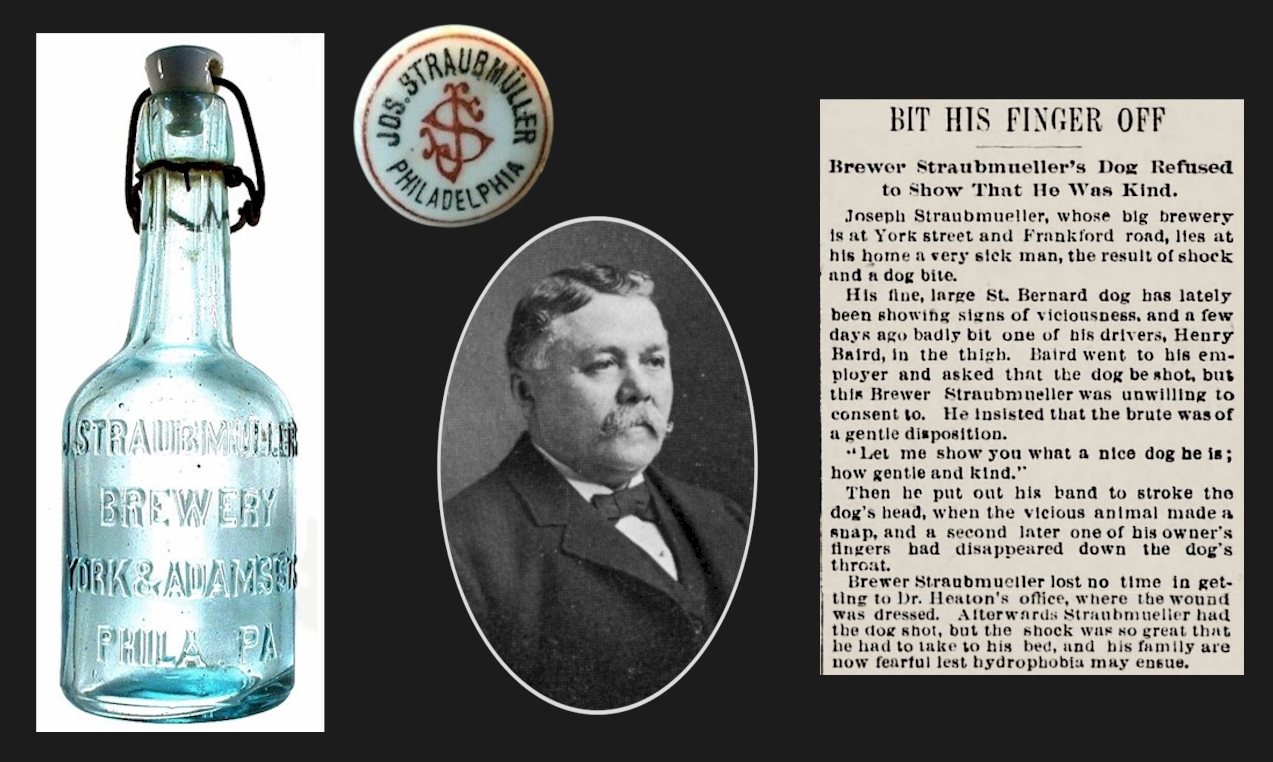
ArtiFact no.95: This "J. Straubmuller's Brewery" bottle (c.1890) gives the
address of "York & Adams Sts. / Phila. Pa." The brewery was established in 1882.
A saloon that he had conducted at York street and Trenton avenue was so
successful that it led to his embarking in the manufacture of beer. In 1905, his
son George joined the firm, which then operated as Joseph Straubmuller & Son
Brewing Co.
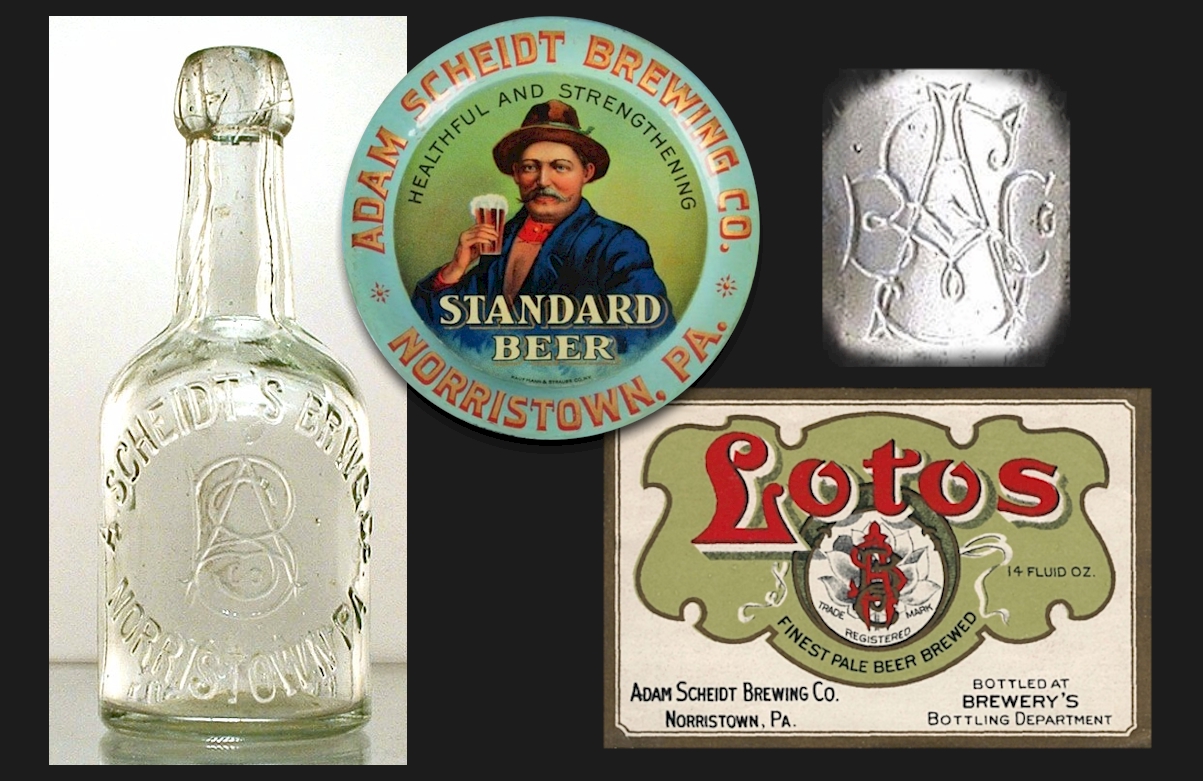
ArtiFact no.94: The monogram on this squat, blob-top bottle is a later one used
for their 20th Century Cream Ale. The earlier version is shown upper-right.
Adam Scheidt became the sole proprietor of this brewery in 1884, then in 1890,
he reorganized the business as the Adam Scheidt Brewing Co.
Scheidt also
produced Standard Beer, Lotos Export, Old Stock & Burton Ales, and Norristown
Porter.
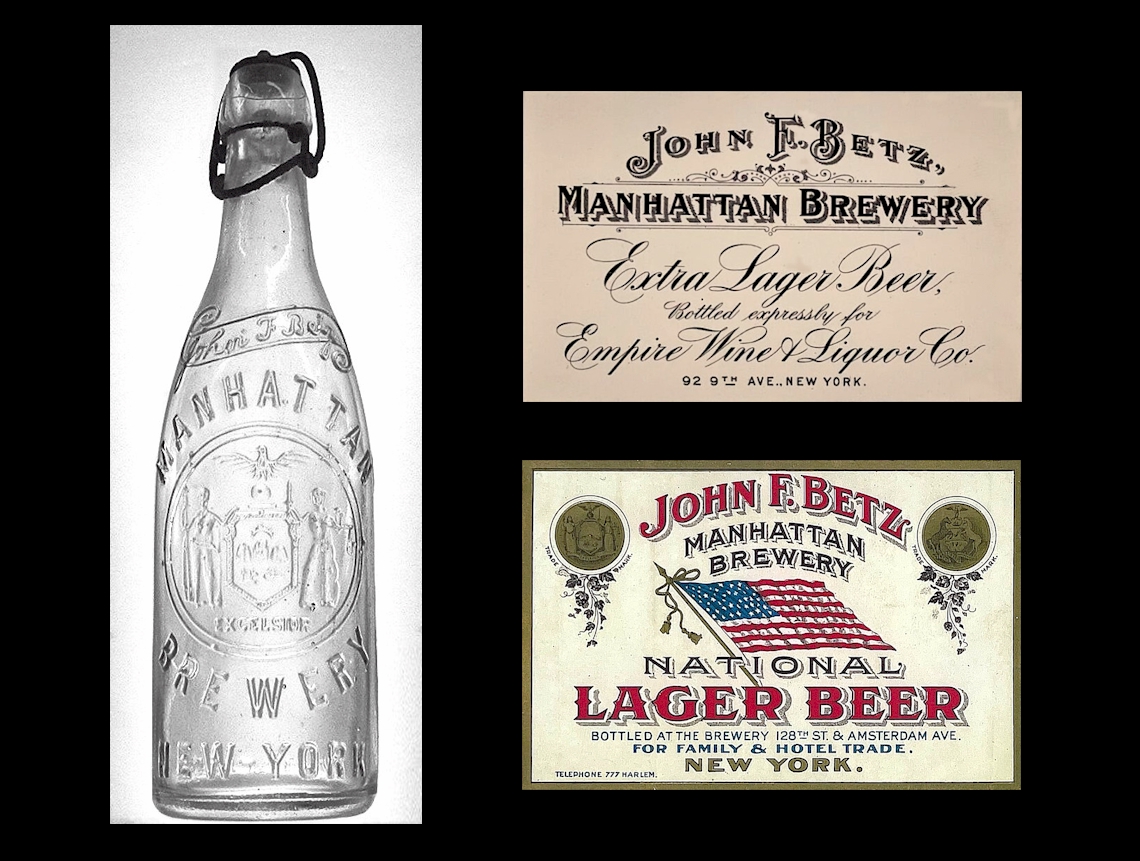
ArtiFact no.93: This Manhattan Brewery pint, was from the brewing company
founded by John F. Betz at Amsterdam Ave. & 128th St. in 1897. This site was
previously home to his brother-in-law's NYC branch, “D.G. Yuengling’s Manhattan
Brewery”.
Betz's Amsterdam Ave. brewery closed in 1901.
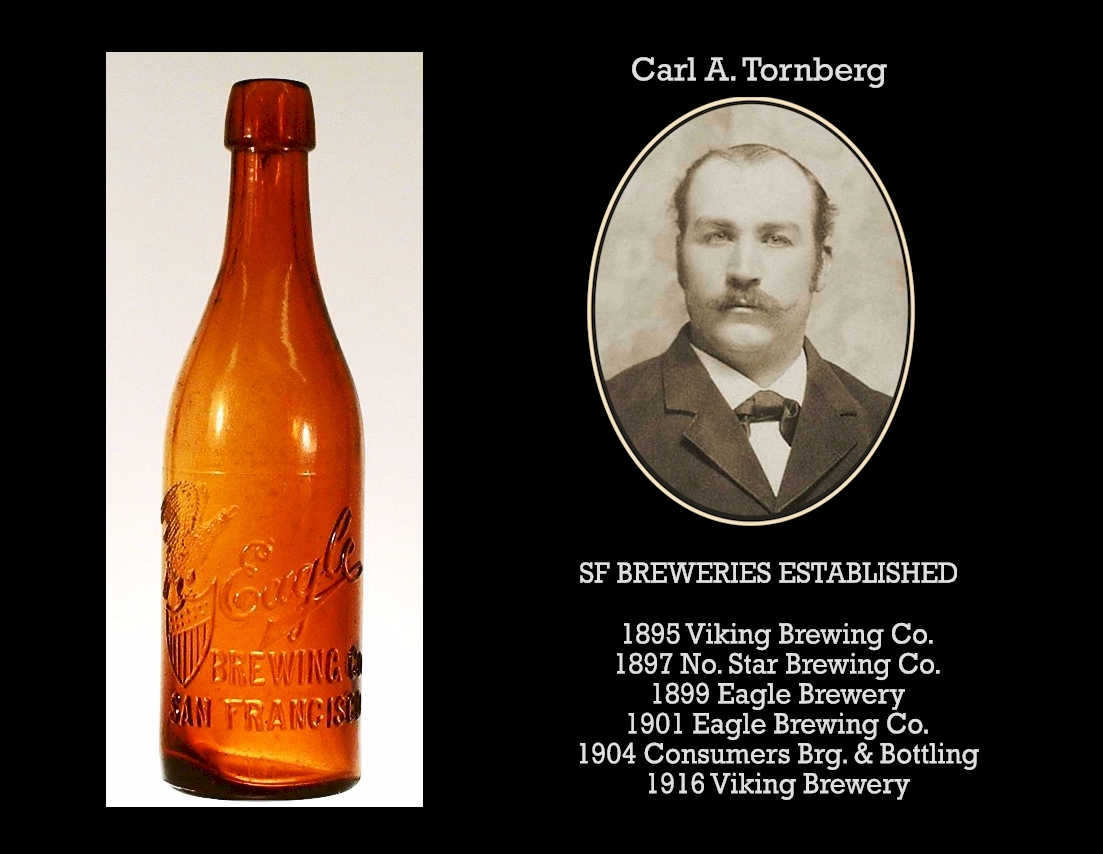
ArtiFact no.92: This Eagle Brewing Co. pint, circa 1901, was from the brewery, established by C.A. Tornberg in 1899 at 1329 Guerrero St., moved to 2213 Harrison St. by 1905, and remained there until 1911. According to the August 30, 1911 edition of the San Francisco Chronicle, the brewery on Harrison Street was destroyed by fire. The brewery then relocated to 5050 Mission from 1912 until 1918, when it became a victim of Prohibition.
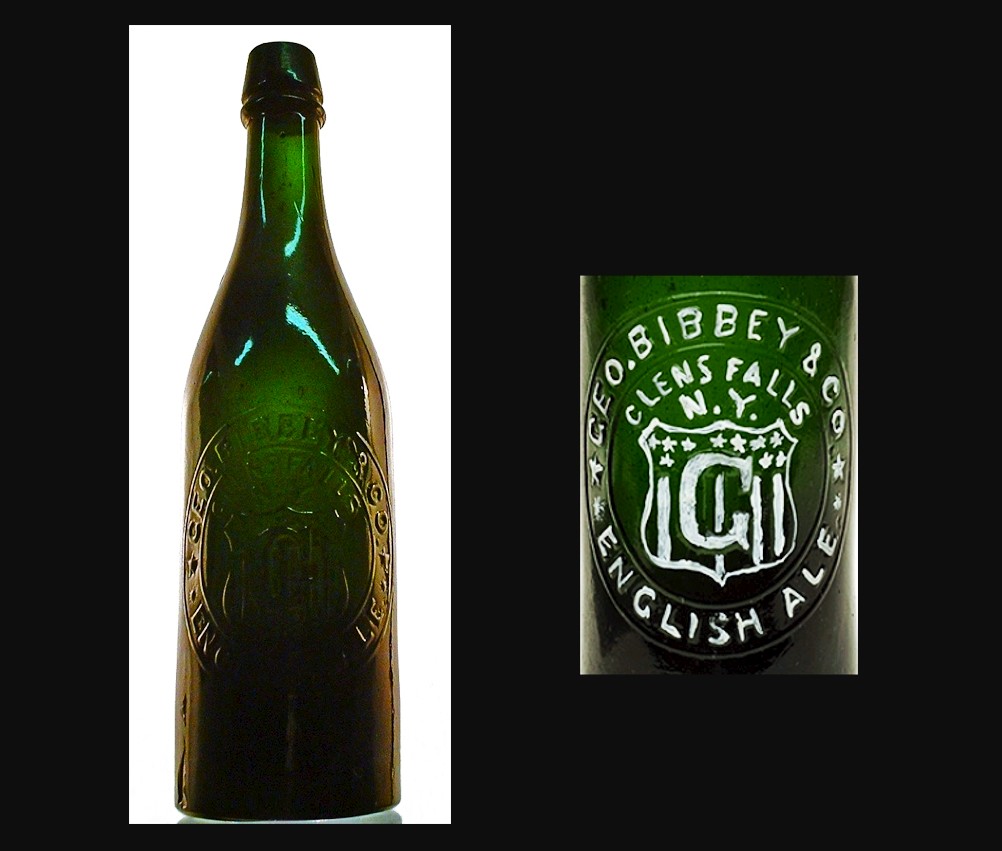
ArtiFact no.91: This deep emerald almost forest green pint stands 10 1/4 inches
tall, with a cork finish, c.1870. It's from George Bibbey & Company, aka Glens
Falls Ale Co., established in 1865. George was born in England in 1803 and
arrived in the U.S. about 1860. A brewer by trade, he soon began offering his
authentic "English Ale" to this part of upstate New York. Bibbey died in 1880.
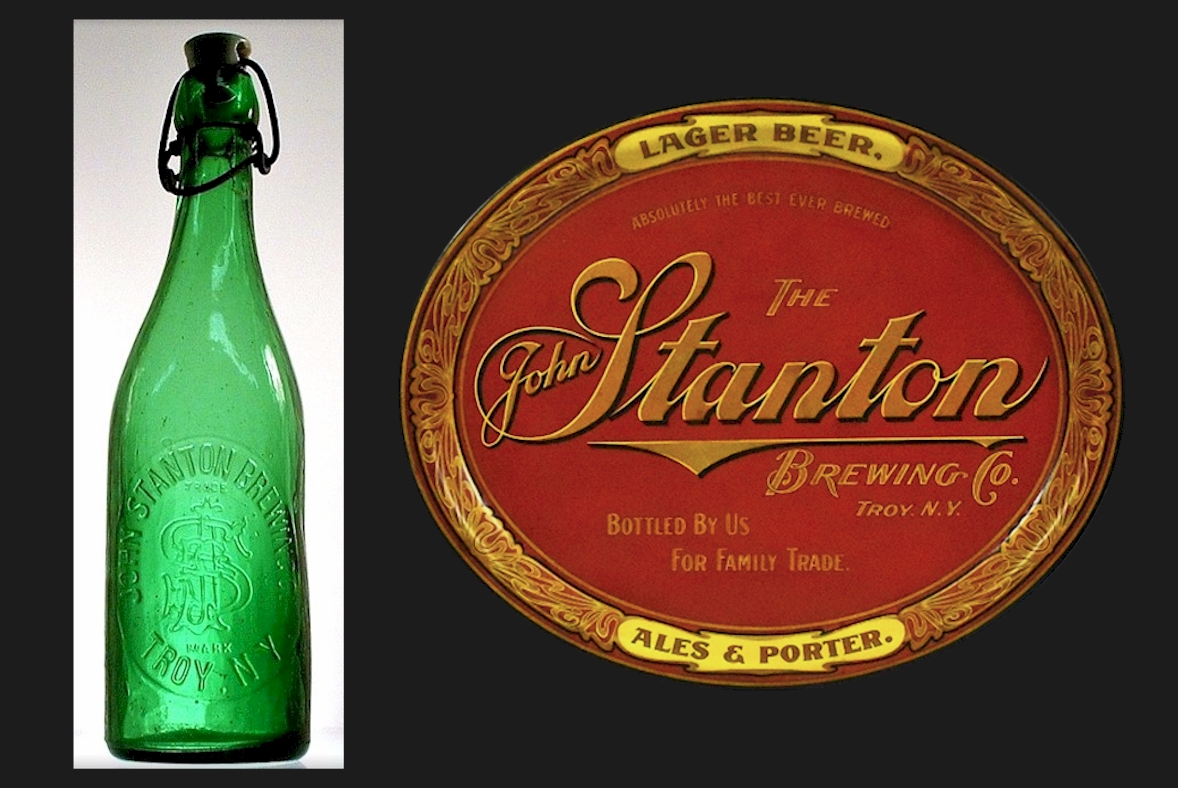
ArtiFact no.90: This emerald green pint is from the John Stanton Brewing Co. of
Troy, NY. The company was established in 1817, but Stanton didn't appear on the
masthead until 1865. This bottle is from much later, the 1890s.
The company
continued operations until Prohibition, and reopened in 1933. Stanton Brewery,
Inc. closed in 1950.
ArtiFact no.1: This iron pontil green bottle, c.1871,
is from the Swan Brewery Co. of San Francisco. The company only existed for a
little over two years, and closed due to insolvency in August 1881.
They
produced a XXX Ale, which is embossed on the bottle, as well as a Brown Stout,
and a Pale Ale, as evidenced by the labels.
